Tracking and Estimating Energy Consumption
across Diverse Network Environments
Kostas Chouns and MS8 Networking contributors
GreenDIGIT Project | June 2026
As European Research Infrastructures (RIs) scale up to handle increasingly data-intensive scientific workflows, their energy consumption and carbon footprints have expanded significantly. To align this digital evolution with the sustainability goals of the European Green Deal, the GreenDIGIT project is building a cross-tier framework designed to institutionalize energy efficiency from physical hardware up to the orchestration of complex experiments.
The GreenDIGIT Multi-Level Architecture
The core of GreenDIGIT’s strategy relies on a multi-level architectural design that splits monitoring, forecasting, and resource optimization across distinct functional tiers:
- Level 1 (L1) – RDE & Experiments: The researcher and developer environment where experimental workflows are designed.
- Level 2 (L2) – VRE Composition & Scheduling: The global brokering layer responsible for cross-site workflow scheduling and orchestration.
- Level 3 (L3) – Site & Resource Management: The local infrastructure level where specific cloud nodes, network segments, or physical hardware operate.
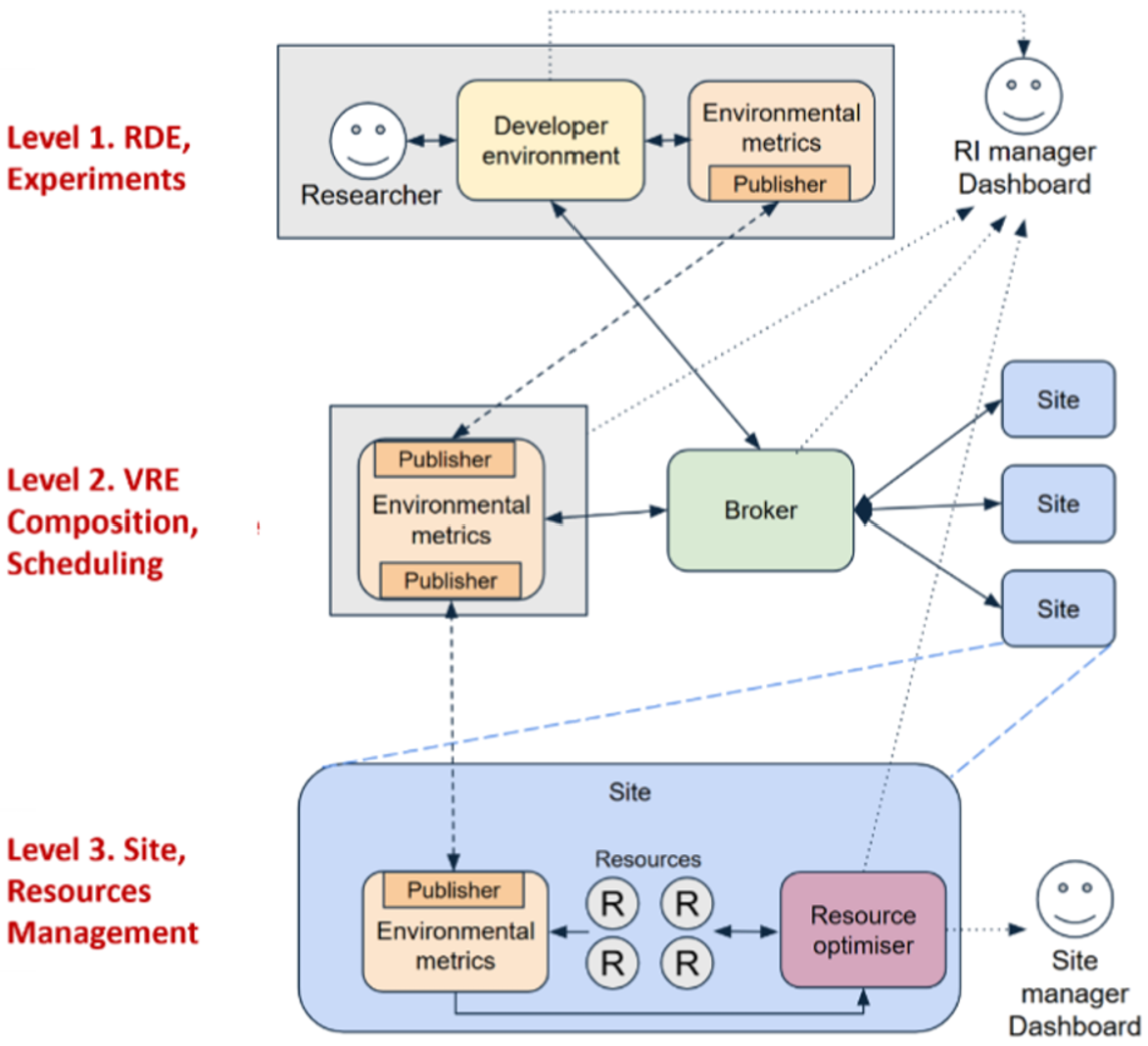
Figure 1. GreenDIGIT architectural diagram L1-L3 (Image Source).
This structural layout is governed by a Producer-Consumer Framework. Individual RIs act as Producers, capturing raw hardware telemetry (power metrics, link characteristics) and compiling workload-correlated facts. Centralized intelligent services act as Consumers, aggregating this rich data to execute global energy-aware scheduling decisions (L2) and enact real-time local runtime adjustments (L3).
Granular Telemetry: Networking Reporting Workflows (L3)
GreenDIGIT examines several types of workloads like Grid, Cloud and Networking by trying to overcome a major bottleneck in digital sustainability: the historical lack of direct energy observability in networking equipment. Unlike cloud data centers, which often expose high-accuracy software-level instrumentation (such as Intel RAPL via Scaphandre), networking domains are highly heterogeneous and frequently rely on proprietary or limited vendor APIs.
To bridge this gap, GreenDIGIT introduces specialized data reporting workflows across three core networking archetypes. The different networking types examined are IoT, 5G and wired networks, with the workflows proposed to be depicted in the figure below.
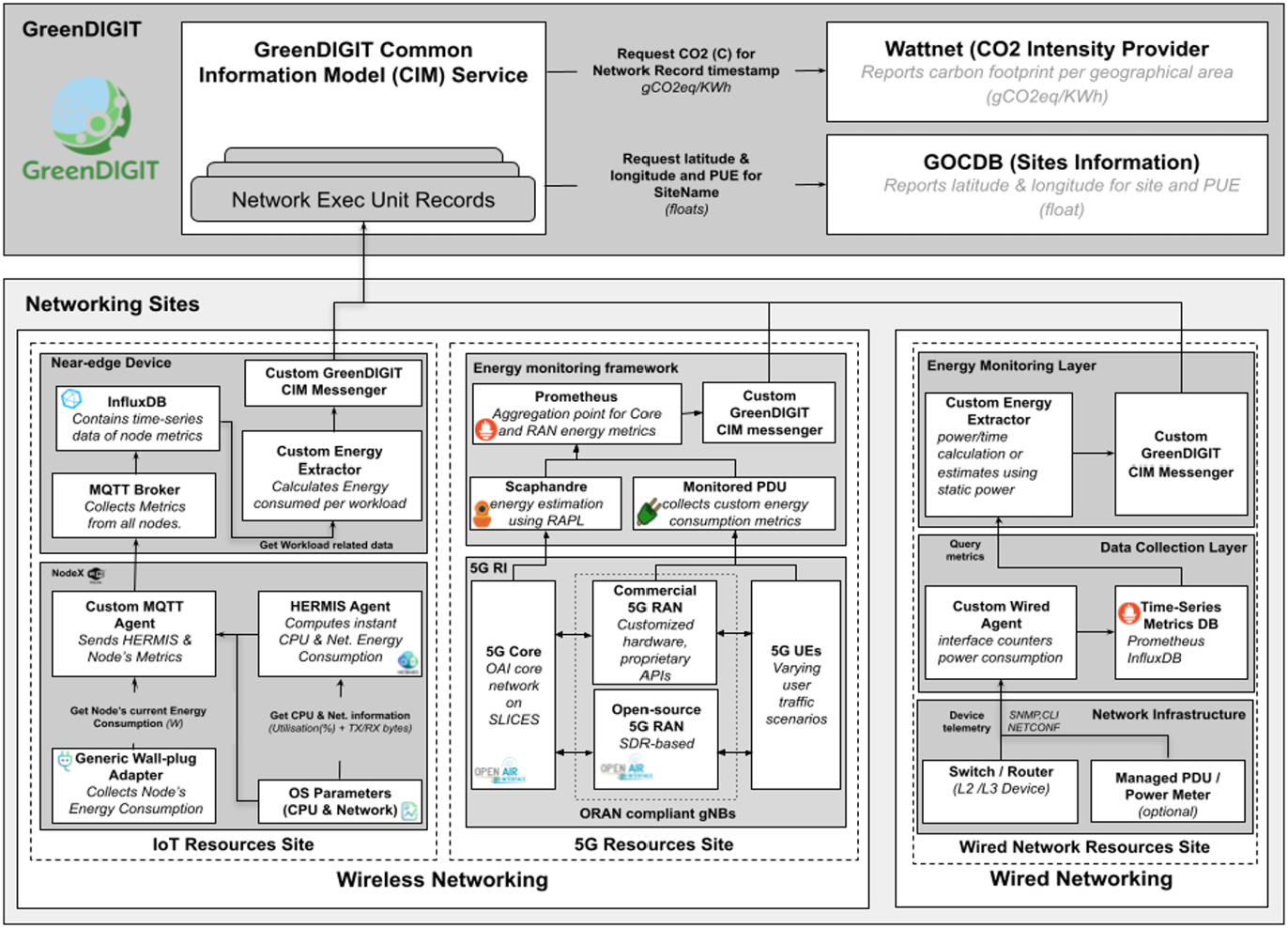
Figure 2. GreenDIGIT networking sites energy reporting workflows.
IoT Networking (Far-Edge and Near-Edge)
For wireless IoT infrastructures—specifically targeting the “high”-throughput IEEE 802.11ah (Wi-Fi HaLow) protocol—GreenDIGIT has developed a Hardware-independent Energy Runtime Monitoring for IoT Systems.
- The Problem: Hundreds of far-edge devices from disparate vendors lack native energy tracking.
- The Solution: HERMIS acts as a lightweight agent deployed on the nodes. By leveraging calibration data from a generic wall-plug adapter, it translates conventional operating system metrics—such as CPU utilization (%), transmitted/received (TX/RX) bytes, RSSI, and TX power—into accurate softwarized power estimations updated every 5 seconds.
- Reporting Stream: These power values are piped via an MQTT publisher to a near-edge gateway, populated in an InfluxDB database, and fed to a Custom Energy Extractor to generate standardized workload-correlated summaries.
5G Networking (Full-Stack Slices Observability)
Modern 5G systems offer immense programmatic flexibility but present substantial energy penalties. GreenDIGIT’s 5G workflow is based on an Observability Framework distributed across distinct architectural domains:
- Infrastructure Domain (IDAF): Deploys specialized bare-metal exporters like Scaphandre (leveraging Intel RAPL) and NodeExporter alongside container cluster monitors (cAdvisor) to measure hardware and virtual resource draws.
- Network Platform Domain (MDAF & NWDAF): Extends 3GPP analytics standards to ingest these underlying metrics and map energy consumption directly to specific virtual entities, network slices, or individual network functions (NFs).
Wired Networking (Telemetry & Attribution Models)
For core transport switches, routers, and aggregation systems where direct power metrics are constrained, the reporting framework combines structured telemetry extraction with a specialized split-energy attribution model:
- Data Collection Layer: Deploys a Custom Wired Agent that queries SNMP high-capacity 64-bit interface counters (IN/OUT bytes) to precisely identify traffic volume within any given execution window.
- L3 Energy Attribution Model: Because enterprise switches draw heavy static baseline power to keep switching fabrics live, the framework decomposes total energy into a shared static baseline (distributed proportionally among active interfaces) and a load-dependent dynamic increment scaled to packet-forwarding throughput.
The Unified Common Information Model (CIM) Integration
Regardless of whether an infrastructure is an IoT mesh, a 5G slice, or a wired enterprise network, all agents serialize their compiled metrics into uniform Network Execution Unit Records formatted via a shared JSON schema. These records track standard variables including Site name, total Energy_wh, and an explicit cross-domain efficiency metric known as “Work” . An indicative result of networking Execution Unit Record.
===== WORKLOAD RESULT =====
{
  "exec_unit_id": "exec_1768986248",
  "src_node": "node09",
  "dst_node": "node12",
  "start_time": "2026-01-21T09:04:08.321311Z",
  "end_time": "2026-01-21T09:10:23.515508Z",
  "duration_s": 375.194197,
  "data_amount_mb": 64.0,
  "bandwidth_req_mbps": 1.4,
  "throughput_mbps": 1.39,
  "jitter_ms": 7.055,
  "packet_loss_percent": 2.4,
  "energy_results": {
    "total_tx_Wh": 0.07949696023309402,
    "total_rx_Wh": 0.01594545490959472,
    "total_energy_Wh": 0.09544241514268874,
    "MB": 68.040237,
    "work_bytes_per_wh": 712893076.9226469
  }
}
Metrics and Access
CIM is already operational. The following tools, APIs, and dashboards are available:
Summary
Most modern digital research infrastructures excel at generating massive volumes of operational data but lack a unified mechanism to interpret its environmental costs. By introducing software-driven telemetry frameworks across disparate IoT, 5G, and wired environments, GreenDIGIT effectively eliminates the network energy visibility gap. Normalizing these diverse hardware signals into uniform Common Information Model (CIM) records provides a single, scalable semantic layer. This ensures that network segments are no longer treated as passive, unmeasured elements, but rather as transparent, quantifiable components of the cloud-to-things continuum.