Sustainable Digital Research Infrastructures: Insights from the GreenDIGIT State-of-the-Art Analysis
Krzysztof Dombek
GreenDIGIT Project | June 2026
As scientific computing continues to evolve, Digital Research Infrastructures (DRIs) are becoming increasingly complex, distributed, and resource-intensive. High-performance computing systems, cloud platforms, AI infrastructures, scientific instruments, and data-intensive research environments all contribute to growing energy consumption and environmental impacts. At the same time, European sustainability policies and reporting requirements are creating new expectations for transparency and accountability.
To better understand these challenges, GreenDIGIT conducted a comprehensive State-of-the-Art (SotA) analysis covering sustainability regulations, monitoring technologies, environmental metrics, HPC and AI infrastructures, and emerging approaches to sustainable digital services. The analysis provides a snapshot of the rapidly evolving sustainability landscape and identifies key trends that will shape the future of research infrastructures.
Sustainability Reporting Is Becoming a Strategic Requirement
One of the strongest trends identified by the analysis is the increasing importance of sustainability reporting across Europe.
The adoption of Commission Delegated Regulation (EU) 2024/1364 under the Energy Efficiency Directive (EED) represents a significant step towards harmonised environmental reporting for data centres. The regulation introduces common reporting requirements covering energy consumption, renewable energy usage, water consumption, waste heat reuse, and other sustainability indicators.
While these requirements were originally developed for data centres, their impact extends far beyond traditional computing facilities. Research infrastructures increasingly operate complex digital ecosystems that combine cloud services, HPC resources, AI accelerators, scientific instruments, and distributed data services. Monitoring and reporting environmental impacts across such heterogeneous environments presents challenges that cannot be addressed through conventional data centre approaches alone.
The analysis highlights the growing need for monitoring frameworks capable of supporting sustainability reporting across increasingly distributed and interconnected research infrastructures.
Monitoring Sustainability Requires a Multi-Layer Perspective
A second important finding concerns the role of monitoring and observability.
Many existing monitoring systems focus on individual infrastructure components, such as servers, clusters, or facilities. However, environmental impacts emerge across multiple layers of a digital infrastructure, from physical facilities and hardware resources to software services, applications, and scientific workflows.
The analysis identified a clear trend towards integrated monitoring approaches that combine multiple telemetry sources into a unified observability framework. Such approaches bring together hardware measurements, environmental sensors, infrastructure monitoring platforms, workload information, and application-level metrics to provide a more complete picture of environmental performance.
This shift reflects a broader understanding that sustainability optimisation requires visibility across the entire computing stack rather than isolated measurements from individual components.
Figure 1 illustrates how sustainability monitoring can be performed across multiple infrastructure layers, integrating facility, hardware, system, orchestration, and application-level telemetry within a unified observability framework.
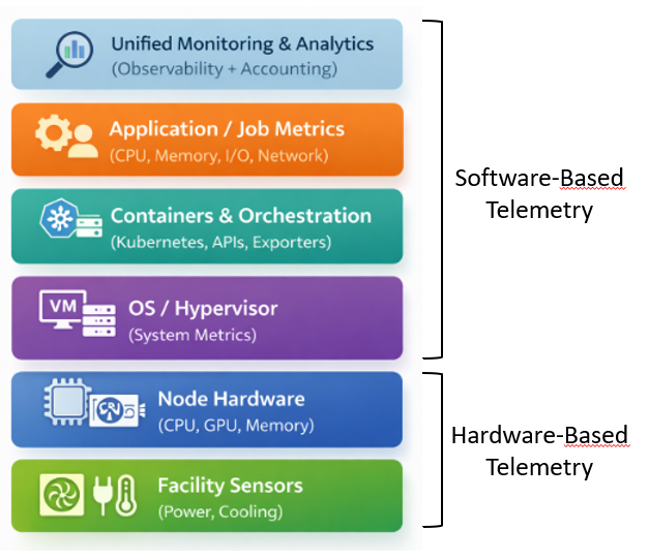
Figure 1. Multi-layer monitoring architecture.
HPC and AI Introduce New Sustainability Challenges
The rapid adoption of Artificial Intelligence is transforming the sustainability landscape of research infrastructures.
Modern AI workloads often rely on GPU-rich systems and specialised accelerators capable of delivering enormous computational performance. While these technologies enable new scientific discoveries and applications, they also increase energy consumption and create additional challenges related to cooling, utilisation efficiency, and environmental impact assessment.
The analysis identified several important trends:
- Growing deployment of accelerator-based computing systems.
- Increasing integration of AI and machine learning into scientific workflows.
- Rising demand for GPU monitoring and utilisation tracking.
- Growing interest in energy-efficient AI training and inference.
- Development of advanced cooling and thermal management technologies.
A key observation is that traditional infrastructure metrics are often insufficient to assess the sustainability of AI-enabled environments. Future sustainability frameworks will need to incorporate workload-aware monitoring and AI-specific efficiency indicators alongside conventional infrastructure metrics.
The Convergence of Cloud-Native and HPC Technologies
Research infrastructures are increasingly adopting hybrid computing environments that combine traditional HPC platforms with cloud-native technologies.
Containerisation, Kubernetes orchestration, and cloud-based deployment models have become common across many scientific domains, while established HPC schedulers continue to provide efficient resource management for large-scale scientific computing.
The analysis found growing interest in integrating these two worlds. Hybrid environments allow researchers to combine the flexibility of cloud-native applications with the performance and scalability of traditional HPC systems. This convergence also creates opportunities for improved resource utilisation and more efficient use of computing infrastructure.
As research workloads become increasingly diverse, interoperability between cloud-native and HPC technologies is expected to become an important aspect of future digital infrastructure development.
Figure 2 illustrates how cloud-native and traditional HPC environments can be integrated within a hybrid computing architecture, enabling Kubernetes and Slurm to support diverse scientific, data-intensive, and AI workloads through coordinated resource management, monitoring, and infrastructure utilisation.
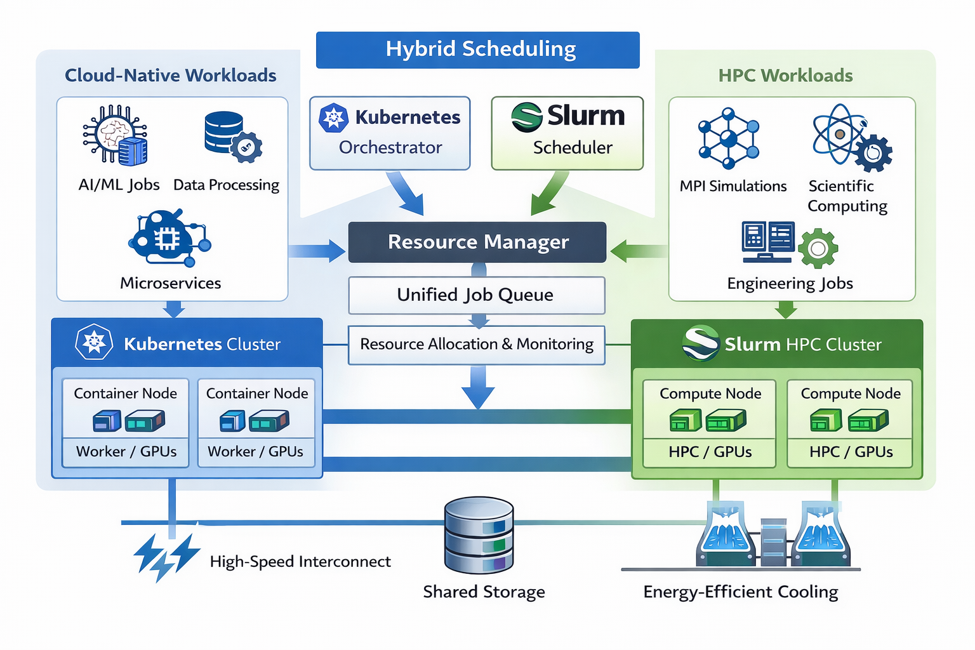
Figure 2. Hybrid Kubernetes and Slurm architecture
Looking Beyond Traditional Energy Metrics
For many years, Power Usage Effectiveness (PUE) has been one of the most widely used indicators for assessing data centre efficiency. However, the State-of-the-Art analysis demonstrates that sustainability assessment is rapidly expanding beyond energy consumption alone.
A growing number of organisations and initiatives are adopting broader sustainability frameworks that incorporate additional environmental indicators, including:
- Carbon Usage Effectiveness (CUE).
- Water Usage Effectiveness (WUE).
- Energy Reuse Factor (ERF).
- Renewable Energy Factor (REF).
- Scope 1, Scope 2, and Scope 3 emissions.
- Lifecycle Assessment (LCA) methodologies.
- Embodied carbon estimation.
These metrics provide a more complete understanding of environmental impacts and enable organisations to evaluate sustainability from multiple perspectives rather than focusing exclusively on operational energy consumption.
The analysis suggests that future sustainability strategies will increasingly rely on combining operational metrics with broader environmental indicators to support informed decision-making.
Sustainability Extends Beyond Infrastructure Operation
Another important conclusion is that environmental impacts cannot be assessed solely during the operational phase of a research infrastructure.
Hardware manufacturing, transportation, deployment, maintenance, upgrades, and end-of-life management all contribute to the overall environmental footprint of digital services. As a result, lifecycle thinking is becoming a central element of sustainability strategies across both industry and research communities.
The analysis highlights growing interest in Lifecycle Assessment methodologies and embodied carbon estimation models that account for impacts generated before infrastructure becomes operational and after equipment is retired.
This broader perspective encourages organisations to consider sustainability throughout the entire lifecycle of infrastructure assets and digital services rather than focusing only on day-to-day operations.
Towards More Sustainable Digital Research Infrastructures
The GreenDIGIT State-of-the-Art analysis demonstrates that sustainability is becoming a multidimensional challenge that extends far beyond reducing energy consumption alone. Effective sustainability management increasingly requires a combination of regulatory compliance, comprehensive monitoring, intelligent resource management, lifecycle thinking, and broader environmental impact assessment.
As research infrastructures continue to evolve towards increasingly distributed, data-intensive, and AI-enabled environments, sustainability considerations will need to become an integral part of both operational and strategic decision-making.
The insights gathered through this analysis provide a valuable foundation for future developments aimed at reducing the environmental footprint of digital research infrastructures while maintaining the performance, openness, and innovation that modern science depends on.
Additional Material
You can find more information here:
Summary
The sustainability of digital research infrastructures depends on much more than reducing energy consumption alone. Effective sustainability management requires comprehensive monitoring, meaningful environmental metrics, lifecycle thinking, and an understanding of emerging technologies such as AI and cloud-native computing. The insights gathered through the GreenDIGIT State-of-the-Art analysis serve as an important foundation for the project’s subsequent activities and the development of sustainability-oriented solutions for research infrastructures.